
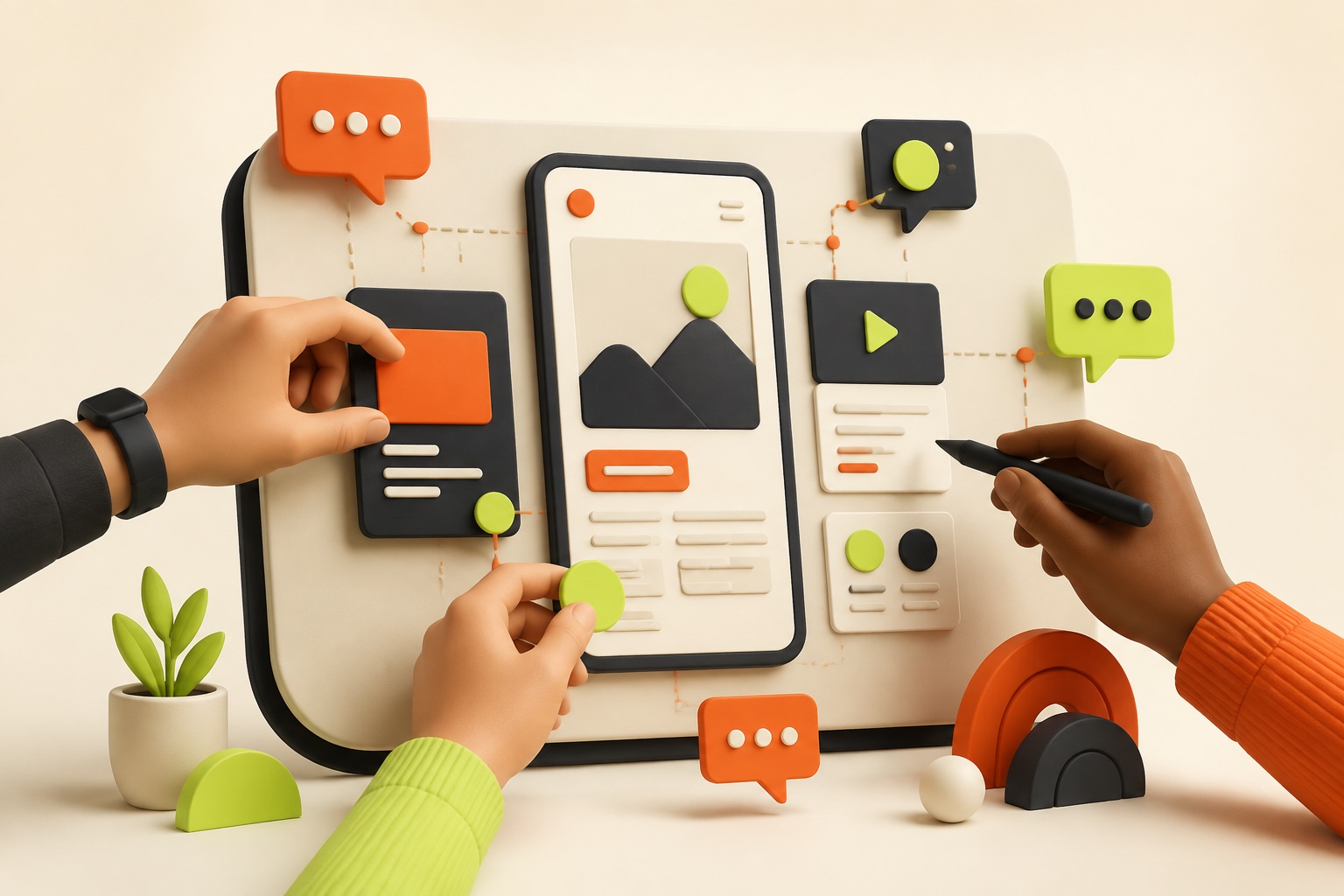
A prototype lets you test an idea before investing in a full build. The most useful feedback comes from watching people attempt a task, rather than asking whether they like the design.
Choose what to learn
Focus the prototype on an uncertain part of the experience, such as a sequence of steps or an unfamiliar interaction.
Pick one question, such as whether a partner can register an opportunity without help. Build only the screens needed to explore that question, and make clear which parts are interactive.
Give people a task
Ask someone to try a realistic scenario. Observe where they hesitate before explaining how the design is intended to work.
Use a neutral prompt and let the participant work without coaching. Note missed controls, unexpected choices, and questions in their own words. A hesitation is an observation; the reason behind it may need a follow-up question.
Turn observations into changes
Record what happened, separate it from your interpretation, and decide which changes to try next.
Group observations by task, prioritize the issues that block completion, and revise the prototype. Test the changed flow again before treating the design as ready for development.
Test the task, not the presentation.
Learn before you build.
Focus each prototype review on a real task, observe without leading, and use what you learn to improve the next version.
Keep these questions close
- What does the person using this need to accomplish?
- Which assumptions should we check before building?
- What is the smallest useful next step?